Summer sale discount off 50%! Shop Now


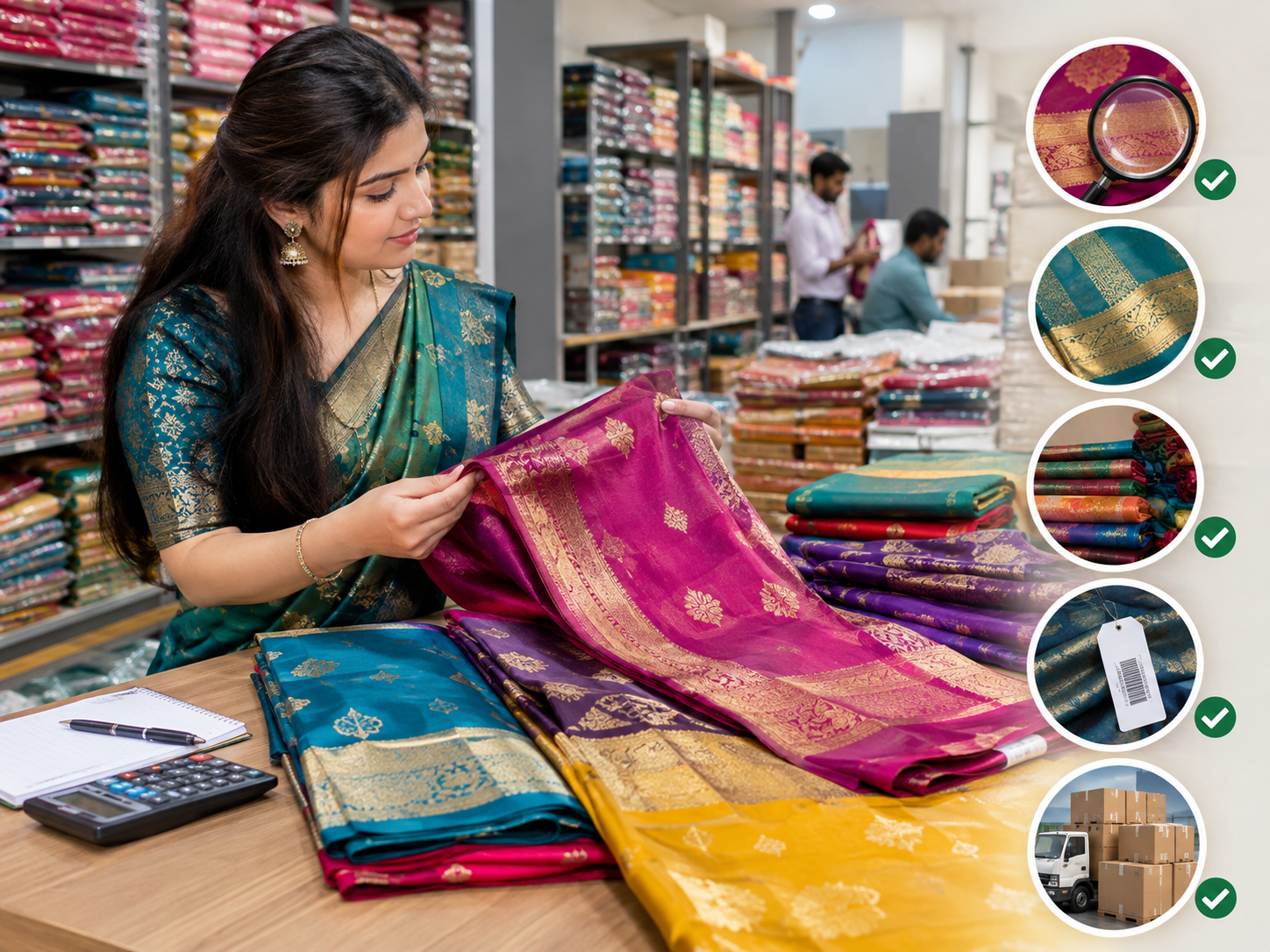
Wholesale Sarees for Retailers : What to Look for Before Buying in Bulk
Sep 21, 2026
By
SRBRAND™
Wholesale Sarees for Retailers: What to Look for Before Buying in Bulk
For saree retailers, boutique owners and ethnic wear businesses, purchasing wholesale sarees is an important part of building a successful product collection. Buying in bulk can provide access to a wider variety of designs, fabrics and styles, but selecting the right collection requires careful planning.
Before placing a wholesale saree order, retailers should consider product quality, customer preferences, MOQ, fabric, designs and the overall requirements of their business.
1. Understand Your Customer Demand
The first step is to understand what your customers are actually looking for. Different markets can have different preferences for saree colours, fabrics, patterns and price ranges.
Before purchasing in bulk, analyse which types of sarees are receiving more enquiries and which designs are suitable for your target customers.
2. Choose the Right Saree Fabrics
Fabric is one of the most important factors when selecting a wholesale saree collection. Retailers can consider different fabrics based on season, occasion and customer preferences.
Popular options can include georgette, chiffon, chinon, cotton, mulmul, khadi and woven sarees.
Offering multiple fabric options can help retailers create a more diverse saree collection.
3. Check Saree Design and Variety
A strong wholesale saree collection should offer variety rather than repeating the same type of design.
Consider collections with different colours, prints, borders, patterns and styling options. A balanced range can help retailers cater to customers looking for everyday wear, festive sarees, party wear and special occasion styles.
4. Check MOQ Before Placing an Order
MOQ, or Minimum Order Quantity, is an important consideration when purchasing wholesale sarees.
Different suppliers and collections can have different MOQ requirements. Retailers should understand the minimum quantity before finalising an order so they can plan their inventory and investment accordingly.
5. Consider Quality and Product Details
Product quality is essential when purchasing sarees in bulk. Retailers should pay attention to fabric details, finishing, colour, borders, prints and overall presentation.
Clear product information can also make it easier for retailers to select suitable collections for their customers.
6. Select Collections According to the Season
Saree demand can change throughout the year. Festivals, wedding seasons and changing weather can influence customer preferences.
For example, lightweight sarees may be preferred for warmer weather, while festive periods can create interest in more detailed and occasion-focused collections.
7. Keep Your Collection Balanced
Retailers can consider maintaining a combination of different saree categories instead of depending on a single style.
- Everyday Sarees
- Festive Sarees
- Party Wear Sarees
- Printed Sarees
- Woven Sarees
- Traditional & Contemporary Designs
A balanced collection can give customers more choices and help retailers serve different occasions and preferences.
8. Work With a Reliable B2B Supplier
Choosing a reliable B2B saree supplier is an important part of wholesale purchasing. Retailers should look for clear product information, consistent collections, suitable MOQ options and a range that matches their business requirements.
SR STAVAN offers ethnic wear collections for retailers and businesses looking for sarees and other fashion products through a B2B-focused platform.
Why Wholesale Saree Selection Matters
The right wholesale collection can help a retailer maintain product variety while staying aligned with customer demand. Instead of selecting products only based on appearance, retailers should consider fabric, design, quality, occasion, MOQ and their target market.
Final Thoughts
Buying wholesale sarees in bulk becomes easier when retailers have a clear understanding of their customers and product requirements. From selecting the right fabric to checking MOQ and building a balanced collection, every factor can contribute to better inventory planning.
If you are looking for diverse saree and ethnic wear collections for your retail or boutique business, explore the latest collections from SR STAVAN.